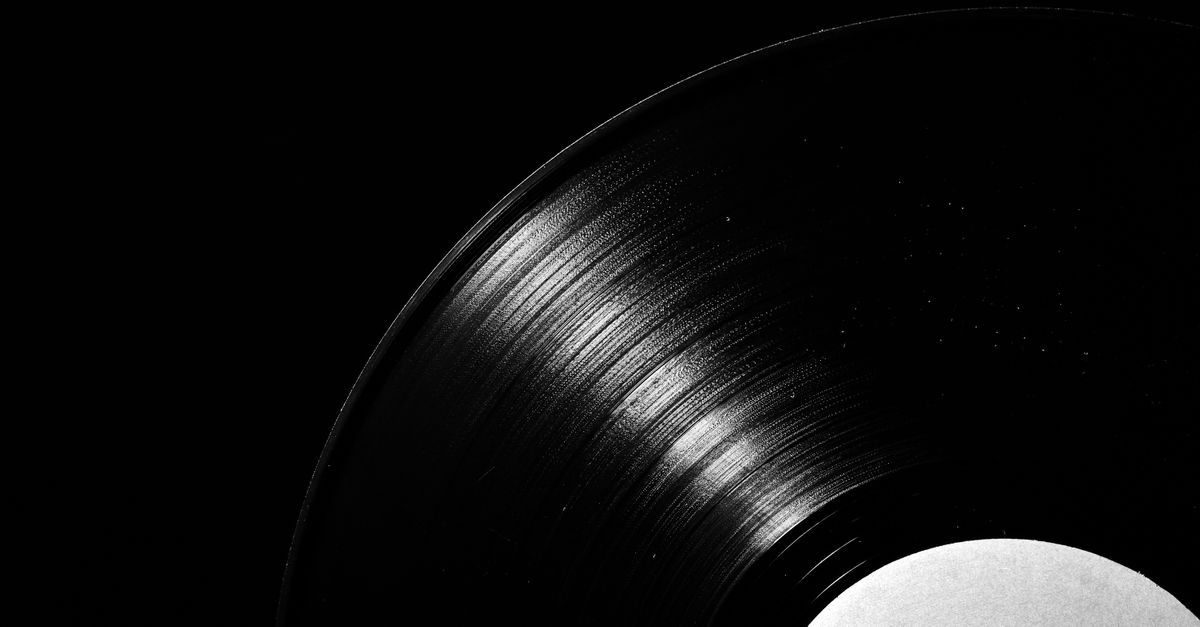
My niece turned 16 last month, and when I asked what she wanted for her birthday, she didn't say AirPods or a new phone. She said she wanted a record player. Specifically, a turquoise suitcase-style one she'd been eyeing at Urban Outfitters for weeks. Her favorite artist? Olivia Rodrigo. Her most-played platform? Spotify, obviously. And yet there she was, asking for a device that predates her parents' first date.
I laughed. Then I remembered I did the exact same thing at her age — except in my case, vinyl was just what music came on. For her, it's a deliberate choice. And she's far from alone.
The Numbers Don't Lie — Gen Z Is Buying Vinyl Like It's 1975
Here's the part that genuinely surprised me when I started digging into the data. The vinyl revival isn't some nostalgic blip powered by middle-aged men rebuilding their college collections. It's being driven, increasingly, by people who weren't alive when CDs were the default.
Gen Z now accounts for a huge and growing share of new vinyl buyers, and the trend has only accelerated into 2025. Record sales have posted year-over-year growth for well over a decade now, and last year vinyl actually outsold CDs in revenue for the umpteenth time running. The RIAA keeps publishing numbers that make label executives do a double-take.
Let me put it plainly: vinyl records are not a comeback story anymore. They're a mainstay. The comeback happened. We're now living in the aftermath, and the aftermath looks like a 19-year-old in a dorm room carefully sliding a translucent orange pressing of a Taylor Swift album onto a turntable.

What's wild is that this isn't limited to legacy acts. New artists are pressing records as a standard part of their album rollouts. If you're a rising pop star in 2025 and you don't have a vinyl variant, did you even release an album?
Why Would Anyone Choose Friction Over Convenience?
This is the question every older music fan asks, and honestly, I asked it too. Why would a generation raised on infinite skips and algorithmic playlists voluntarily choose a format that requires flipping a disc every 20 minutes?
The answer is more interesting than "they're being contrarian."
1. Ownership feels like rebellion. Gen Z has grown up in a world where they don't own their music — they rent access to it. Streaming catalogs can vanish overnight due to licensing disputes. A record, by contrast, is yours. It sits on your shelf. Nobody can revoke it.
2. Physical media is a flex. A vinyl record is a piece of decor, a conversation starter, and a statement of taste all at once. Posting your shelf on Instagram says more about you than posting a screenshot of a playlist ever could.
3. The ritual matters. I've found that the most common thing young collectors say is some version of "it makes me actually listen." You can't doomscroll while you're flipping a record and reading the liner notes. The friction isn't a bug — it's the entire point.
4. It's affordable-ish self-expression. At $25-$40 a pop, records aren't cheap, but they're a lot cheaper than concert tickets, and they last forever.
Here's what most people miss: Gen Z isn't rejecting streaming. They're layering vinyl on top of it. Spotify is for discovery; vinyl is for devotion. That's a completely different relationship with music than any generation has had before.
The Vinyl Supply Chain Is Freaking Out (In a Good Way)
There's a less glamorous side to all this that nobody talks about, and it's genuinely fascinating. Vinyl pressing plants can't keep up. There are only so many lathes in the world, and they've been running at capacity for years.
I've read interviews with plant owners who describe waits of six to nine months just to get an album pressed. Artists have had to delay physical releases because the queue was too long. Adele's 30 famously choked the entire global supply chain when it dropped — plants had to prioritize her run, and smaller indie artists got pushed to the back of the line for months.
That's a real problem, but it's also a signal. When demand outstrips manufacturing capacity for a physical format in the age of the cloud, something meaningful is happening.
The industry has responded. New pressing plants have opened. Old ones have expanded. There's even been a surge of interest in automated pressing tech to speed things up. But here's the thing — collectors don't want fast. They want good. A poorly pressed record with surface noise and warping is a dealbreaker for a generation that's used to pristine audio.

The Record Store Is Gen Z's Third Place
You know what else I've noticed? Record stores are packed with young people again. Not as a novelty, but as a genuine hangout.
I walked into a shop in my city last weekend and there were maybe a dozen people under 25, flipping through crates, arguing about pressings, asking the owner about a limited run. The owner told me his average customer age has dropped by nearly 15 years in the past five. Record Store Day, which used to feel like a Boomer reunion, now looks like a college campus event.
There's something deeply human about this. In a world of infinite digital everything, Gen Z is choosing scarcity, community, and physicality. They're trading the algorithm for the crate. And honestly? I think they're onto something.
So Is This All Just a Phase?
Let's be honest — every generation has had a format revival that turned out to be temporary. Cassettes came back for a minute. MiniDiscs had their moment among enthusiasts. But vinyl is different, and I'll tell you why.
Vinyl survived the CD. It survived the MP3. It survived streaming. It didn't just survive — it grew through all of them. That's not a trend cycle. That's a format finding its permanent niche: the premium, intentional, collectible way to experience music.
The real question isn't whether Gen Z will abandon vinyl. It's whether the industry can keep up with them without ruining what makes it special. If pressing plants turn into mass-production factories and every release gets 47 limited-edition color variants designed to milk collectors dry, the magic could sour.
But for now? The kids are alright. They're at the record store, they're saving up for that turquoise suitcase player, and they're listening to full albums front to back — something most of us stopped doing years ago.
So here's my challenge to you this week: go to a record store. Not online, not a big-box retailer. An actual store with a person behind the counter who knows their stuff. Buy one record. Take it home. Put your phone in another room. Listen to a full side without touching anything.
You might rediscover why music became your thing in the first place. And if you're a Gen Z reader — I already know you get it. Tell me in the comments: what was the first record you ever bought?


