
I still remember the exact moment I rolled my eyes at my phone screen. It was 2019, and someone on Twitter had photoshopped Oscar Isaac’s face onto a promotional poster for Moon Knight. The caption read something like, "This is the only casting choice that makes sense." I thought it was the most delusional, fan-fiction-adjacent nonsense I’d ever seen. I mean, who actually believes a niche comic book character is going to get cast based on a Twitter poll?
Fast forward to 2024. Oscar Isaac is literally wearing the white suit, and I’m eating a hefty slice of humble pie.
That was the moment I realized the game had changed. It wasn’t just a lucky guess; it was a preview of a new industrial complex. Fan casting has evolved from a basement-dwelling hobby into a legitimate focus group that dictates the financial futures of multi-billion-dollar franchises. We aren't just watching the movie anymore—we’re voting on the cast before the script is even written.
The Algorithm Ate the Audition Tape
Here’s what most people miss about the modern casting process: it doesn’t start in a casting director’s office anymore. It starts on TikTok, Reddit, and YouTube. Studios have access to data that would make the NSA blush. They can see exactly which actor generates the most positive engagement when associated with a specific IP.
I’ve found that there is a distinct difference between "who would be good" and "who trends well." Let’s be honest, if studios only cared about acting chops, we’d see a lot more stage actors getting massive paydays. Instead, they care about the "pre-sold" audience. When a fan casts Henry Cavill as basically any grizzled warrior in existence, they aren't just expressing a wish—they are generating free marketing collateral.
The studios don't have to run a single focus group. They can just scan the comments section of a YouTube video for The Witcher and see that the audience consensus is "Cavill good, writing bad." That data is pure gold. It removes the risk. If a fan casting thread for a new X-Men movie gets 100,000 upvotes for a specific actor, the studio knows there is an existing, passionate, and vocal demographic that will show up on opening night. They have effectively outsourced their pre-production scouting to the masses.
The "Looks Like a Doodle" Paradox
But here is where I start to get conflicted. There is a massive difference between casting based on personality and casting based on vibe or aesthetics. The fan casting phenomenon often hinges on a single, high-resolution screenshot where an actor happens to look like a character from a graphic novel.
Take the recent discourse around casting for the next James Bond or the next Superman. The "fancasts" often feature actors who have the jawline and the hair, but lack the emotional range for the role. It becomes a costume contest rather than a performance. We are obsessed with the "Cameo" look—that split-second visual resemblance—rather than the "Canon" behavior.
I remember when everyone was screaming for a specific actor to play a young Wolverine. He looked the part in a fan edit—scruffy, short, angry. But when you look at his actual filmography, he’s a rom-com lead. He doesn't have that coiled-spring intensity that Hugh Jackman brought (which, ironically, wasn't in the comic books at all—Jackman is 6'3" while Wolverine is 5'3" in the source material).
Here’s the truth: The best casting decisions in history were "wrong" according to fan logic. Michael Keaton was a weird choice for Batman. Heath Ledger was a "gay cowboy" playing the Joker. Nobody was fan-casting those guys. They were cast by directors who saw something deeper than a physical likeness.
The Echo Chamber of "Perfect Choices"
The danger of the algorithm-driven fancast is that it creates an echo chamber. If you spend enough time on a specific subreddit, you will start to believe that Actor X is the only person who can play Reed Richards. You will see hundreds of AI-generated images of them in the role. Your brain starts to accept it as reality.
Then, when the studio makes a different—and often more interesting—choice, the internet riots.
We saw this with the backlash to certain "non-traditional" casting announcements. The fans had already written the movie in their heads, and any deviation felt like a betrayal. This puts studios in a bind. If they follow the fancast, they get immediate hype but potentially a one-dimensional performance. If they break the mold, they risk a PR disaster on Twitter for a week.
Personally, I think the "Cameo" to "Canon" pipeline is only successful when the fans are right about the soul of the actor, not just the skin.
- The Good: When fans campaigned for
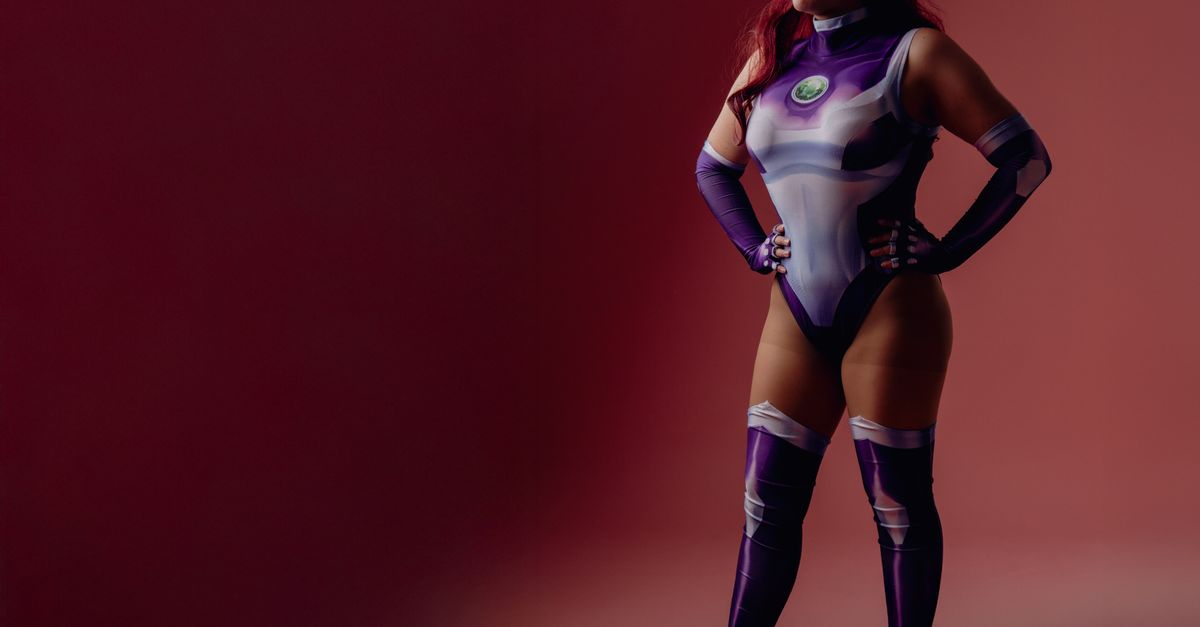
- The Bad: When fans demanded an actor purely because they fit a specific "ethnicity swap" or "hair color" without considering if they can carry a franchise.
- The Ugly: When the actor themselves starts liking and commenting on these fancast posts, essentially campaigning for a job via public opinion.
When the Fans Actually Nail It
But I have to give credit where credit is due. Sometimes, the crowd is scarily prescient.
The most obvious victory lap is the casting of Pedro Pascal in essentially everything. For years, fans wanted him as Reed Richards (Mr. Fantastic). The internet saw his ability to be a goofy dad figure with immense gravitas. When Marvel eventually cast him, it felt less like a surprise and more like a contractual obligation to the internet. And it worked. Why? Because Pedro Pascal has that "Daddy" energy that translates to both action hero and family man—a duality required for the character.
Another great example is the long-running hope that [Name Redacted] would play a specific villain in the Batman universe. For a decade, fans photoshopped him into the role. When it finally happened, the casting announcement trended globally for three days. The actor didn't need to audition; the fans had already done the screen test for him. This is the new "Canon" moment—when the studio legitimizes the fan fiction.

The Director Is No Longer the Author
This shift has fundamentally altered the power dynamic on set. Before, a director like Christopher Nolan would cast based on a secret script and a whispered conversation. Now, a director has to negotiate with a public consensus that has been building for years.
It creates a weird dynamic where the actor is walking into a role with a pre-conceived audience expectation that is nearly impossible to shatter. If the fan casting wanted a stoic, brooding hero, and the director wants to show a vulnerable, crying hero, the audience might reject it because it conflicts with the "vibe" they built in their heads.
I’ve noticed that studios are now hiring actors who are essentially "human hashtags." They bring their own fandom with them. The casting of a beloved actor becomes the entire marketing campaign. "Your favorite actor is now your favorite hero" is the pitch. It’s efficient, but it lacks the magic of discovery.
We lose the thrill of the unknown. We lose the chance to be surprised by an actor we never considered, who completely transforms into the role.
The Bottom Line: It’s a Crowdsourced Script
So, is this a good thing?
I think it’s a double-edged sword. On one hand, it gives the power back to the people. It feels democratic. If we shout loud enough, we get what we want (Hi, Snyder Cut). On the other hand, it homogenizes the product. We end up with the "safe" choice, the "popular" choice, rather than the "inspired" choice.
The next time you see a fancast that makes you go, "Oh, that’s perfect," I want you to pause and ask yourself: Is it perfect because they look like the comic panel, or is it perfect because they can act the hell out of the tragedy that awaits them?
If you are just looking for a live-action cosplay, then sure, let the algorithm decide. But if you want a movie that surprises you, that challenges you, then maybe we should stop shouting our picks at the screen and let the filmmakers do their jobs.
But hey, that’s just my take. I’m still waiting for them to cast me as the next Doctor Doom. I have the scowl down pat, and my cosplay is already ordered. Who are you campaigning for? Let me know in the comments—and be prepared to defend your choice with more than just a pretty picture.





