
Let me tell you something — we all love a good life hack, but let's be honest: 90% of the listicles out there are just recycled Pinterest pins telling you to use a rubber band to open a jar. You didn't click on this because you need to open a jar. You clicked because you have that nagging feeling that your day-to-day routine is 20% more exhausting than it needs to be.
I've been there. I once spent an entire week being irrationally angry at my own kitchen cabinets before realizing I was just storing things wrong.
So here’s the deal. I scoured my own chaotic life, talked to some absurdly organized friends, and dug through corners of the internet most people ignore. The result is this list of ten weirdly specific, surprisingly effective life hacks that you didn’t know you needed — until now.

The "Brain Dump" That Actually Sticks
We all know the feeling of walking into a room and forgetting why. It’s not aging; it’s your brain being a cluttered hard drive. Most people try to fix this with "to-do lists," but I’ve found that a standard checklist is useless if you write it on a sticky note that inevitably gets lost in the void.
Here’s the hack: Keep a single, physical notebook dedicated solely to "Open Loops." Every time you think of something you need to do—whether it's emailing your landlord or buying more toothpaste—write it there. But here's the twist: You have to write it in pen, and you have to date it.
Why does this work? Because when you put a date on it, you create a sense of temporal urgency. That little notebook becomes an external hard drive for your brain. Suddenly, you stop worrying about remembering to do the thing, which frees up mental RAM to actually focus on the task at hand. It sounds stupidly simple, but the physical act of writing (not typing) signals a deeper cognitive lock.
The Two-Minute Rule Is a Lie (Here’s the Truth)
You’ve heard the productivity gospel: "If it takes less than two minutes, do it now." That’s fine for emails, but it fails spectacularly when you have chronic procrastination. I used to follow that rule and still ended up paralyzed by a pile of "quick" tasks that added up to three hours of misery.
The real hack? It’s called "Micro-Scheduling." Instead of asking how long a task takes, ask when you are going to start it.
Take a task you’re dreading. Don't schedule the task. Schedule the initiation of the task. For example, don't write "Clean the bathroom." Write "Walk into the bathroom with a sponge at 3:00 PM." That’s it. Once you are physically there with the sponge, momentum takes over. I’ve found that starting is the hardest part because of the cognitive friction involved. By lowering the stakes to just "walking into the room," you bypass the brain's resistance. You trick your amygdala into thinking you're not actually doing the work, and then you just... do it.
Stop Fighting Your Closet; Start Fighting the Air
Let’s talk about laundry, specifically, folding. If you are one of those people who folds everything into perfect rectangles and stacks them vertically (the "KonMari" method), good for you. But for the other 98% of us, laundry is a war we lose weekly.
The hidden hack is to stop folding your underwear and socks entirely.
Seriously. I've found that my morning routine got 15 minutes faster when I switched to a "Basket System." Instead of folding socks, I just have a small bin for "clean socks" and a bin for "clean underwear." They are clean. They are in a specific place. I don't care if they are wrinkled—nobody sees them.
The psychological win here is massive. By eliminating the most tedious items from your folding queue, you reduce the "ugh" factor of laundry significantly. You’re less likely to let clean clothes sit in the dryer for three days (where they get musty and need re-washing). You save money, water, and your sanity.
The "Bad Date" Strategy for Groceries
Grocery shopping is a scam. Not the prices—the layout. Stores are designed to make you wander. If you walk in without a plan, you are a leaf in the wind. You’ll buy the artisanal cheese and forget the onions.
Here’s the hack: Shop the perimeter of the store first, and then go down the middle aisles backwards. That’s right, walk the wrong way down the cereal aisle.
Why? Because the most expensive, impulse-buy items are placed at eye level in the center. When you walk backwards (or from the back of the aisle to the front), you are looking at the cheaper store-brand alternatives first. You’re also moving against the flow of traffic, which forces you to be more deliberate. It’s the "Bad Date" strategy—you don't commit to the first thing that smiles at you. You shop like you have standards.
Charging Your Phone at 40% (The Battery Myth)
Everyone obsesses over charging their phone to 100%. We panic when it hits 20%. But I’m here to tell you that you are slowly killing your battery by doing this. Modern lithium-ion batteries hate extremes.
The hack: Keep your phone between 40% and 80% charge as much as possible. Think of the battery like a balloon—it doesn't like being stretched to the max or completely deflated.
I’ve started doing "top-up" charges. Instead of charging overnight while I sleep, I plug it in during my morning coffee for about 20 minutes. This keeps the battery in the "sweet spot." My last phone lasted almost three years before I replaced it, and it still had 89% battery health. If you want to keep your $1,000 pocket computer running fast without replacing it, stop charging it to the brim. It’s a small habit shift that saves you big bucks down the line.

The 5-Second Rule for Your Mouth
Let’s talk about arguments. Whether it’s with your partner, your co-worker, or the guy who cut you off in traffic, the urge to get the last word in is primal. But here’s the truth most people miss: being right is overrated.
The hack is to implement a "Three-Breath Pause" before you respond to anything that makes you angry. It sounds too simple, but physiologically, it changes your state. When you are angry, your body is flooded with cortisol and adrenaline. That chemical reaction takes about 90 seconds to dissipate. If you speak within that 90-second window, you are literally speaking from a chemical high.
By taking three deliberate, deep breaths (inhale through the nose, exhale through the mouth), you force your body to wait out the chemical wave. I’ve found that after those breaths, I still might be annoyed, but I’m no longer furious. And a calm response is always more effective than a furious one. You win the argument by not needing to win the argument. That is the ultimate flex.
The "Passive Income" Trick for Your Car
If you drive a car, you know the pain of parking in the sun. You come back to a cabin that feels like the surface of Venus. We all crank the AC and wait, sweating.
The hack: Before you leave your car, roll down the window on the shady side of the car (if there is one) just a crack—about an inch. Then, swing the door on the sunny side open and close it about five times.
This is the "Super-Soaker" trick. By pumping the door, you act like a bellows, forcing the superheated air out of the car and drawing in the cooler ambient air from the shaded side. This drops the internal temperature by about 10-15 degrees instantly. It takes five seconds and saves you from that initial blast of heat stroke when you get in.
The Spare Key Mind Game
We’ve all hidden a spare key under the doormat or a fake rock. And we’ve all seen the movies—that’s the first place a burglar looks.
The hack: Don't hide the key near the door. Hide it inside the mailbox.
Wait, don't close the tab. I don't mean your personal mailbox on the street. I mean your door-mounted mail slot, or the parcel box. If you have a mail slot in your door, push the key inside the slot so it rests on the inside lip. If your door opens inward, you can often reach in and grab it. It’s the last place someone will check because it’s technically inside the house. It looks like trash or a piece of mail to a casual observer. It’s the perfect spot that isn't a spot.
Duct Tape for Your Brain
We have a rule in my house: If it takes less than 60 seconds to do, we do it immediately. But that’s for chores. What about thoughts? Specifically, that nagging thought of "I should really text them back."
The hack: If you think of someone randomly during the day—an old friend, a colleague—send the text right away. Don't save it for later. Don't say "I'll do it after this meeting."
I’ve started treating random thoughts of people as a signal. It takes ten seconds to send a "Hey, thought of you today, hope you're good" text. The return on investment is astronomical. It maintains relationships with almost zero effort. It’s duct tape for your social life—it fixes small rips before they become tears.
The 10-Minute Vacation
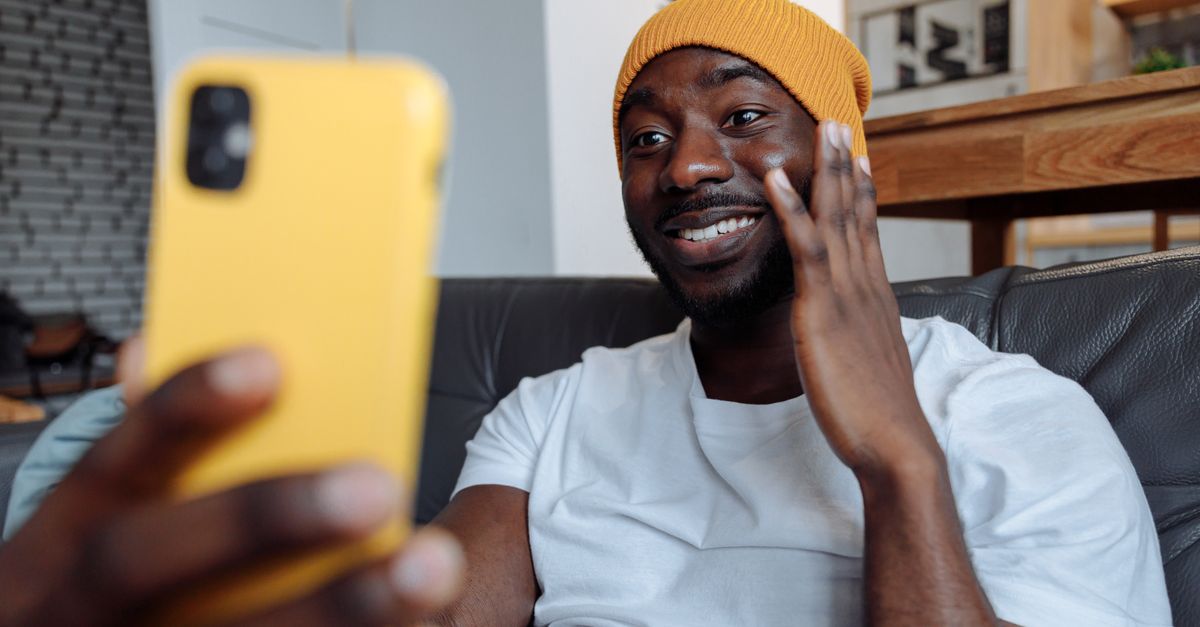
Finally, let’s talk about burnout. We are all tired. We don't have time for a spa day or a week in Bali. So you need a "Micro-Vacation."
The hack: Once a week, take a 10-minute walk without your phone. No music, no podcasts, no step counter. Just you and the street.
It sounds boring, and that's the point. In a world of constant input, boredom is a luxury. I’ve found that those ten minutes are where my best ideas come from. It resets your dopamine levels. You come back to your desk with a clear head, often more productive than if you had stayed and "grinded" for an extra hour. You don't need a beach; you need silence.
So, there you have it. Ten tiny shifts that feel weird at first but pay off in the long run. The goal isn't to optimize every second of your life into a robotic spreadsheet—that sounds miserable. The goal is to remove the friction. If you can save the mental energy you were spending on folding socks or overcharging your phone, you have more energy left for the things that actually matter.
Which one of these are you going to try today? Start with the car trick—I promise it will blow your mind (and cool your seat).





